Walk any staffing operations lead through their tech spend and you'll find the same pattern: a growing stack of tools, each bought to fix a symptom, none of them fixing the cause. Sourcing feels slow, so you add a sourcing tool. Screening is inconsistent, so you add an assessment tool. The database is a mess, so you add AI search on top of it. Costs rise, workflows multiply, and the fundamental problem — the data is unstructured, unverified, and decaying — is exactly where it was. The answer was never more software. It's data infrastructure.
Infrastructure is unglamorous, which is why it gets skipped. But it's the reason some firms compound advantage while others just accumulate subscriptions. Getting the talent data infrastructure right changes what every tool on top of it is capable of.
Software sits on top of data. If the data is weak, the software is too.
Every application is only as good as the data it reads. Point the best AI matching engine at raw, unverified resumes and it will confidently surface the wrong people — garbage in, confident garbage out. That's why firms keep feeling let down by tools they were promised would be transformative: the tools work; the foundation under them doesn't. You can't buy your way past a data problem with an interface.
What data infrastructure means in staffing
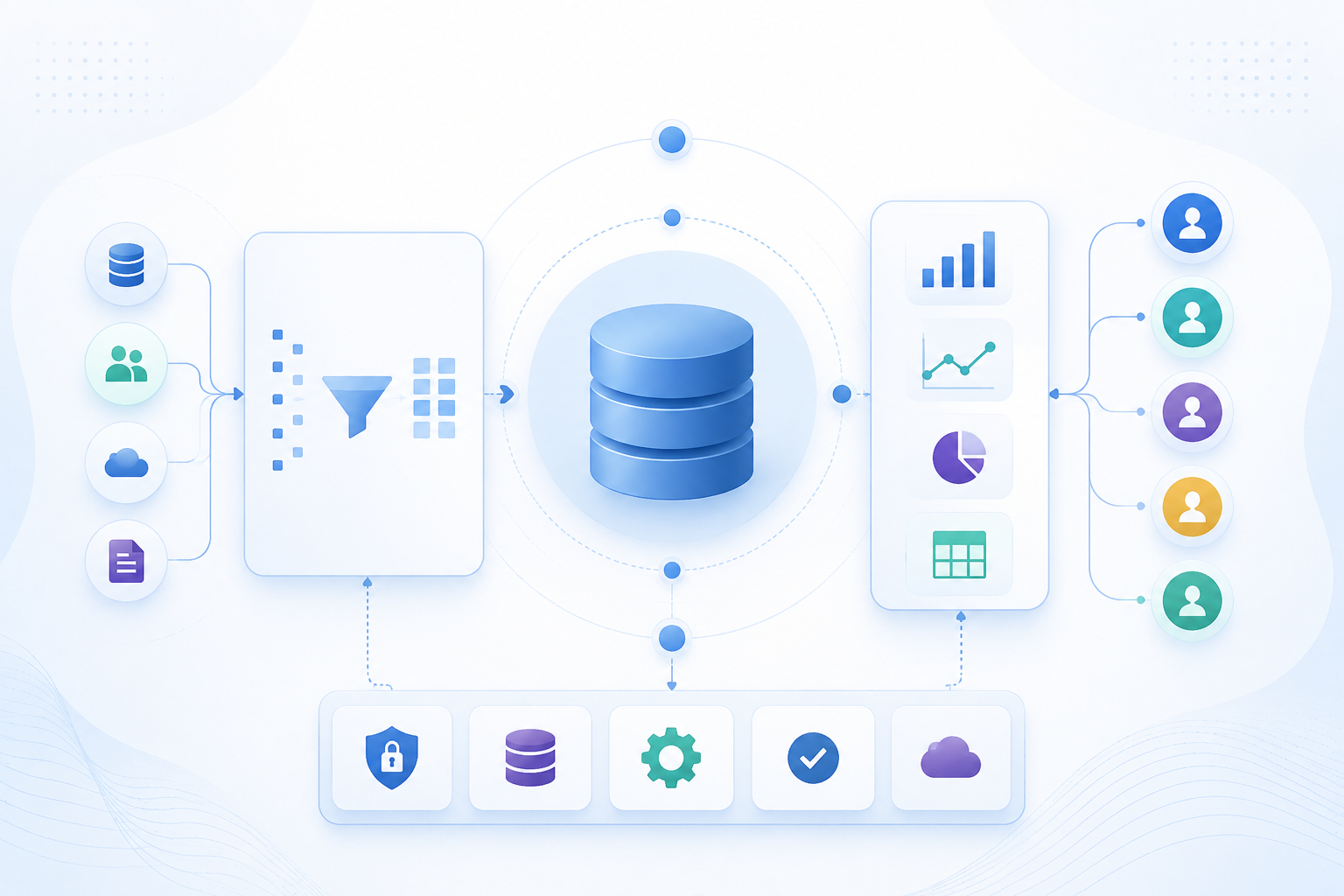
Data infrastructure is the set of capabilities that turn raw candidate signals into a durable, reusable asset. It captures data directly, verifies and scores it, structures it into comparable fields, indexes it for instant retrieval, and refreshes it so it stays true. Notice that none of those are features of a single app — they're properties of a foundation that many apps can share.
The four jobs infrastructure has to do
• Capture first-party signals directly from candidates, not scraped or self-reported text.
• Verify and score claims against real evidence so the data can be trusted.
• Structure and index it so any tool can query it in seconds.
• Refresh it continuously so it doesn't silently decay.
A firm that does these four things owns something; a firm that just licenses tools rents someone else's workflow and keeps its own data raw.
Why more tools make it worse, not better
Each new tool adds its own data model, its own copy of the truth, and its own integration debt. Now the same unverified candidate exists in five systems, each slightly out of date, and reconciling them becomes its own job. More software multiplies the surface area of a data problem you never solved. Infrastructure collapses it back to a single verified source everything else reads from.
What good infrastructure looks like in practice
Simera is essentially a data-infrastructure company wearing a staffing coat. Its engine captures first-party, permissioned, multi-modal candidate data, verifies and scores it with AI, and runs a continuously refactored search engine on top — with a data-collection flywheel that keeps roughly 77% of its content unique and current through automated, zero-cost refresh triggers. The staffing outcomes people see are downstream of that infrastructure, not the other way around.
The lesson for any firm isn't "buy Simera's tools." It's that the durable advantage lives in the foundation. Before the next tool purchase, ask whether it strengthens your data infrastructure or just adds another interface on top of the same weak data. That single question redirects budget from symptoms to causes.
Continue the series: The People Data Layer
This article is part of Simera's 8-part series on the people data layer. Keep reading with Every Staffing Company Needs a People Data Layer, The Missing Data Layer in Staffing, From ATS Database to Talent Intelligence, Your Candidate Database Is an Untapped Data Asset, The API-fication of Talent, People Data Lessons From Fintech, and Portable, Structured, Interoperable Talent Data.
📊 The data layer, in one place.
Frequently asked questions
Why won't more software fix our data problems?
Because software reads data — it doesn't fix it. Point great tools at unverified, decaying resumes and they confidently surface the wrong people. The fix is infrastructure that makes the underlying data structured and verified.
What is talent data infrastructure?
It's the foundation that captures candidate signals directly, verifies and scores them, structures and indexes them, and refreshes them over time — a shared source of truth many tools can draw from, rather than a feature of one app.
We've already spent a lot on tools. Is that wasted?
Not necessarily. Good infrastructure makes the tools you own work better, because they finally run on trustworthy data. The waste comes from adding more tools to paper over a weak foundation.
How does infrastructure stay current?
Through continuous refresh — automated triggers that re-collect and re-score data so it doesn't decay. Simera's data-collection flywheel is one example of this running at effectively zero marginal cost.