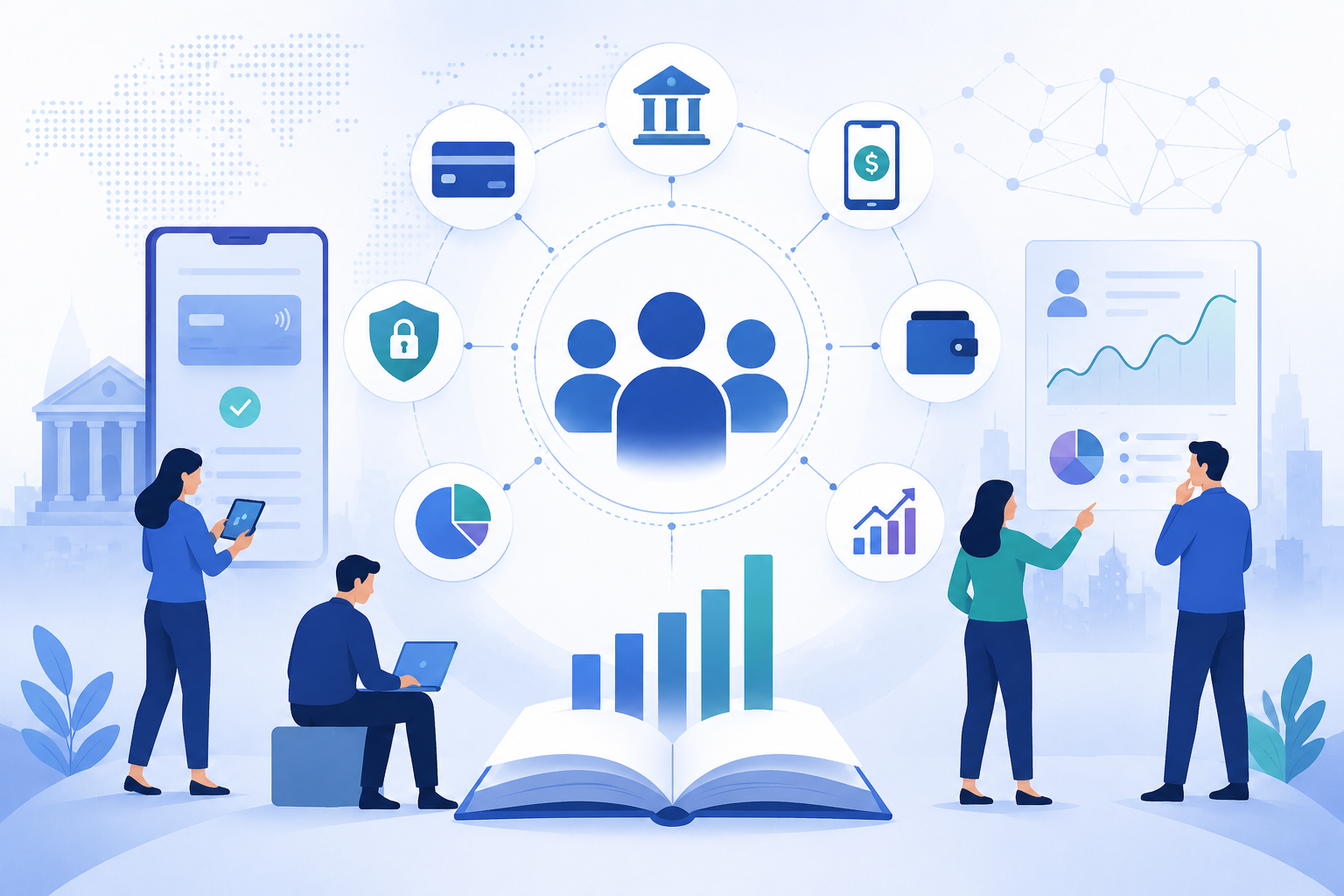
A decade ago, moving money programmatically was a nightmare of bespoke bank integrations, inconsistent formats, and manual reconciliation. Then a wave of companies did the hard, invisible work of turning messy financial data into clean, verified, programmable infrastructure — and an entire fintech ecosystem was built on top of it. Staffing is sitting exactly where finance was: rich in data, poor in infrastructure. The playbook that transformed one is remarkably relevant to the other.
This isn't a loose metaphor. The specific moves fintech made — standardizing data, verifying it at the source, making it interoperable, and keeping it current — map almost directly onto what people data in staffing needs. Studying that transition is one of the clearest ways to see where talent data is heading.
Lesson 1: The data was always there. The infrastructure wasn't.
Banks had all the transaction data in the world; what was missing was a trustworthy, structured way to access and act on it. Staffing has the same profile — years of candidate interactions, screens, and outcomes — with no structured layer to make it usable. In both cases the constraint was never a shortage of data. It was the absence of infrastructure to turn raw records into something reliable.
Lesson 2: Verification is the whole game
Fintech doesn't work without trust. A payment rail that's right most of the time is useless; the value comes from data you can rely on without re-checking. People data is no different. Unverified, self-reported candidate claims are the staffing equivalent of an unreconciled ledger — plausible and dangerous. The firms that win treat verification not as a nice-to-have but as the property that makes the whole data layer worth anything.
Lesson 3: Interoperability beats lock-in
Financial data became powerful when it stopped being trapped inside one institution's format and became portable across systems. Talent data is heading the same way. Data locked inside a single ATS in a proprietary shape is worth less than structured, portable data that can move and integrate. Interoperability is what let fintech compose new products, and it's what will let staffing do the same.
The fintech-to-staffing translation
• Standardized transactions → structured, comparable candidate signals.
• KYC and verification → assessments, work samples, and verified evidence.
• Open, portable data → interoperable talent data, not vendor-locked records.
• Continuous settlement → continuous refresh so data stays true over time.
Lesson 4: Someone has to own the boring foundation
Fintech's breakout products were possible because unglamorous companies did the foundational work of making financial data clean and trustworthy first. People data needs the same. Simera plays that role for talent: a data engine that captures first-party, permissioned, multi-modal candidate data, verifies and scores it with AI, and refreshes it continuously so it stays current — with roughly 77% of its content unique because it's generated through direct relationships rather than scraped. That's the equivalent of building the rails before the apps.
The takeaway for staffing leaders is to stop waiting for a magic front-end and start valuing the foundation. Fintech rewarded whoever built trustworthy data infrastructure first. People data will reward the same discipline — verified, structured, interoperable, and continuously refreshed.
Continue the series: The People Data Layer
This article is part of Simera's 8-part series on the people data layer. Keep reading with Every Staffing Company Needs a People Data Layer, The Missing Data Layer in Staffing, From ATS Database to Talent Intelligence, Your Candidate Database Is an Untapped Data Asset, and The API-fication of Talent.
📊 The data layer, in one place.
Frequently asked questions
What can staffing learn from fintech's data journey?
That the constraint is infrastructure, not data. Fintech turned messy financial records into verified, structured, interoperable, continuously updated infrastructure — the exact moves people data in staffing needs.
Why is verification so central to the analogy?
Because trust is what makes data usable without re-checking. Just as a payment rail must be reliable, candidate data must be verified against evidence rather than accepted as self-reported claims.
What does interoperability mean for talent data?
It means data that isn't locked inside one ATS's proprietary format — structured and portable so it can move between systems and power new products, the way open financial data enabled fintech.
Who builds the people-data foundation?
Someone has to do the unglamorous work of making talent data trustworthy first. Simera's data engine does this — capturing, verifying, scoring, and refreshing first-party candidate data as the rails others build on.